 11
11Table of Contents
Togglehttps://www.youtube.com/watch?v=qer4ejJgjDk
3D printing has evolved far beyond hobbyist tinkering. Today, engineers, product designers, architects, students, and manufacturers rely on powerful laptops to run demanding CAD modeling, slicing, simulation, and rendering software. Whether you’re using Autodesk Fusion 360, SolidWorks, Blender, Ultimaker Cura, or PrusaSlicer, your laptop plays a critical role in workflow speed and productivity.
In this comprehensive WordPress-ready guide, we break down the Top-10-laptops-for-3D-printing-in-2026
, covering full specifications, performance insights, pros and cons, ideal users, pricing, and step-by-step purchase guidance.
Also check out best budget laptop for music production
3D printing workflows typically involve:
3D modeling (CPU-intensive)
Real-time rendering (GPU-intensive)
Slicing large STL files (multi-core CPU usage)
Simulation and stress testing (high RAM + GPU)
Multi-tasking across CAD, browser, and design libraries
If your laptop lacks sufficient CPU cores, RAM, or GPU power:
Models lag during rotation
Slicing large models takes excessive time
Rendering fails or crashes
Simulations become unreliable
For smooth 3D printing work in 2026, prioritize:
Modern multi-core CPUs (Intel Core i7/i9 or Ryzen 7/9)
Dedicated GPUs (NVIDIA RTX series recommended)
Minimum 16GB RAM (32GB preferred)
Fast NVMe SSD storage
Good thermal management
| Laptop | CPU | GPU | RAM | Storage | Best For | Price Range |
|---|---|---|---|---|---|---|
| Dell XPS 15 | Intel Core Ultra 7 | RTX 4060 | 16–64GB | 1TB SSD | Designers | $1,900–$2,800 |
| MacBook Pro 16-inch | M3 Pro/Max | Integrated (High-core GPU) | 18–96GB | 512GB–4TB | Creators | $2,499–$3,499 |
| ASUS ROG Zephyrus G16 | Core i9 | RTX 4070 | 16–32GB | 1TB SSD | Power users | $2,000–$2,600 |
| Lenovo ThinkPad P1 Gen 7 | Core i9 / Xeon | RTX A2000 | 32GB | 1TB SSD | Engineers | $2,500–$3,500 |
| HP ZBook Studio G10 | Core i7/i9 | RTX A-series | 32GB | 1TB SSD | Professional CAD | $2,400–$3,200 |
| MSI Creator Z17 | Core i9 | RTX 4070 | 32GB | 1TB SSD | Renderers | $2,200–$2,800 |
| Acer Predator Helios 16 | Core i9 | RTX 4080 | 16–32GB | 1TB SSD | Heavy slicing | $1,800–$2,500 |
| Razer Blade 16 | Core i9 | RTX 4080 | 32GB | 1TB SSD | Premium users | $2,800–$3,600 |
| Lenovo Legion Pro 7i | Core i9 | RTX 4080 | 32GB | 1TB SSD | Large assemblies | $2,200–$2,900 |
| ASUS TUF A15 | Ryzen 7 | RTX 4060 | 16GB | 1TB SSD | Budget users | $1,100–$1,500 |
These are the top-10-laptops-for-3d-printing-in-2026
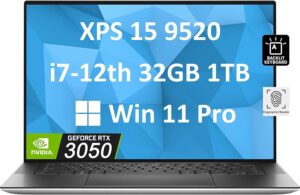
CPU: Intel Core Ultra 7 155H
GPU: NVIDIA RTX 4060 (8GB VRAM)
RAM: 16GB–64GB DDR5
Storage: 1TB–4TB NVMe SSD
Display: 15.6” 3.5K OLED
Ports: Thunderbolt 4, USB-C, SD card reader
Battery: 86Wh
Weight: 4.2 lbs
Build: CNC aluminum + carbon fiber
The RTX 4060 handles Blender rendering and SolidWorks visualization efficiently. The high-resolution OLED panel ensures accurate design detailing.
Smooth rotation of large assemblies
Fast slicing in Cura
Reliable thermal management under sustained loads
✔ Premium build
✔ Excellent display
✔ Expandable RAM
✘ Expensive upgrades
✘ Limited USB-A ports
Industrial designers and professionals.
$1,900–$2,800
Buy from Dell’s official website for configuration flexibility.
Select at least 32GB RAM for heavy CAD.
Add extended warranty (3 years recommended).
Consider a USB-C hub for extra ports.
Look for financing via Dell Pay or Amazon monthly payments.
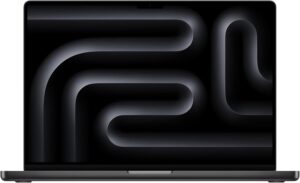
CPU: Apple M3 Pro or M3 Max
GPU: 18–40-core GPU
RAM: 18GB–96GB unified memory
Storage: 512GB–4TB SSD
Display: Liquid Retina XDR
Battery: Up to 22 hours
Weight: 4.7 lbs
Excellent for Fusion 360, Blender, and 3D rendering. macOS stability benefits creative workflows.
Extremely fast export times
Efficient power consumption
Silent under moderate load
✔ Exceptional battery life
✔ Stunning display
✔ High unified memory ceiling
✘ Expensive
✘ Not ideal for some Windows-only CAD apps
Creative professionals and Blender artists.
Buy via Apple Store for student discounts.
Choose 32GB minimum for professional use.
Add AppleCare+ for extended protection.
Use Apple financing or Amazon installment plans.
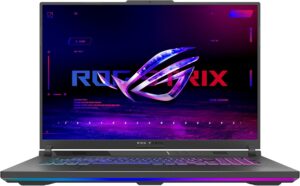
High-performance gaming hardware makes this ideal for 3D workflows.
Intel Core i9
RTX 4070
16–32GB RAM
1TB SSD
240Hz display
Large 3D models and simulation-heavy projects.
$2,000–$2,600
Buy from ASUS official store or trusted retailers. Upgrade RAM to 32GB for better multitasking.
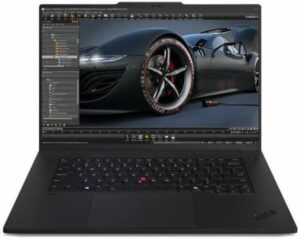
A true mobile workstation certified for SolidWorks.
Intel Core i9 or Xeon
NVIDIA RTX A2000
32GB RAM
1TB SSD
ISV-certified drivers ensure stable CAD performance.
Professional engineers.
Buy directly from Lenovo for business warranty options.
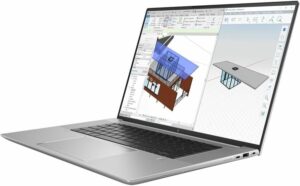
Built for enterprise-grade modeling.
RTX A-series GPU
32GB RAM standard
DreamColor display
Best purchased via HP Business Store with warranty bundles.
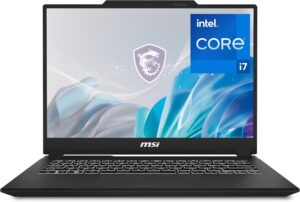
Core i9
RTX 4070
32GB RAM
165Hz QHD+ display
Ideal for rendering and animation-heavy 3D printing projects.

RTX 4080 makes slicing ultra-fast.
Best for users running large STL files daily.
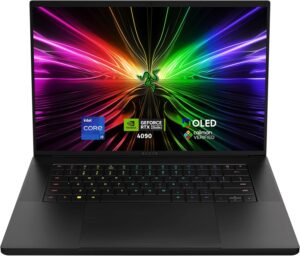
Premium build with RTX 4080.
Excellent for high-end 3D visualization.
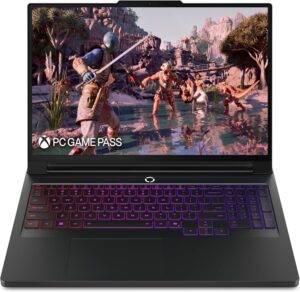
Balanced power and cooling.
Great for engineers handling multi-part assemblies.
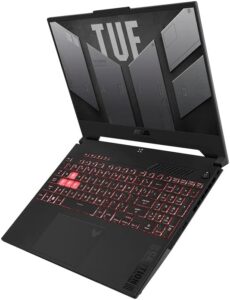
Affordable yet capable.
Ryzen 7
RTX 4060
16GB RAM
Perfect for students and hobbyists.
CPU: Quad-core processor
RAM: 16GB
GPU: GTX 1660 / RTX 3050 equivalent
Storage: 512GB SSD
CPU: 8+ cores
RAM: 32GB+
GPU: RTX 4060 or better
Storage: 1TB NVMe SSD
Multi-core CPUs accelerate slicing and simulation. Aim for Intel Core i7/i9 or Ryzen 7/9.
For rendering and visualization, RTX GPUs outperform integrated graphics significantly.
16GB minimum. 32GB recommended for professional CAD.
Use NVMe SSD for fast load times.
QHD or 4K preferred for detailed modeling.
Essential for sustained workloads.
Yes. Gaming laptops often have powerful GPUs and CPUs ideal for CAD and slicing.
Only if you rely on ISV-certified software like SolidWorks professionally.
For beginners, yes. Professionals should opt for 32GB.
Not natively. Requires virtualization.
3D printing workflows are unique because they combine multiple computational tasks:
Parametric modeling
Mesh processing
Simulation and stress testing
Toolpath generation
Rendering
Multi-task file management
Each of these stresses different hardware components.
When using software like Fusion 360 or SolidWorks, most sketch calculations rely on single-core CPU performance. This means:
Higher clock speed = smoother sketching
Strong IPC (Instructions Per Cycle) = faster rebuild times
More cores = better multitasking (but not always faster modeling)
The CPU recalculates constraints.
Dependencies between parts are updated.
Feature trees are recomputed.
If your CPU is weak:
Model rebuild time increases dramatically.
Simple changes can freeze the viewport.
Productivity drops.
Recommendation: Look for CPUs with turbo speeds above 4.5GHz.
Large STL files (100MB–500MB+) consume significant memory.
RAM is used for:
Holding geometry in memory
Running background processes
Supporting rendering engines
Managing undo history
| Task | Average RAM Usage |
|---|---|
| Basic modeling | 8–12GB |
| Large assemblies | 16–24GB |
| Simulation + modeling | 24–40GB |
| Rendering + modeling simultaneously | 32–64GB |
If RAM runs out:
System starts paging to disk
Performance drops drastically
Crashes become common
That’s why 32GB is often the sweet spot for professionals.
Modern CAD and rendering engines increasingly rely on GPU acceleration.
Real-time viewport rendering
Shaded mode visualization
Ray tracing
GPU-based rendering (Blender Cycles)
AI denoising
RTX GPUs include:
CUDA cores (parallel computation)
RT cores (ray tracing)
Tensor cores (AI acceleration)
For rendering workflows, GPU acceleration can reduce render time by 50–70% compared to CPU-only rendering.
Most people focus on CPU and GPU — but storage speed also matters.
| Storage Type | Speed | Impact |
|---|---|---|
| SATA SSD | ~500MB/s | Acceptable |
| NVMe Gen 3 | 3,000MB/s | Fast |
| NVMe Gen 4 | 7,000MB/s | Extremely fast |
Faster SSD means:
Faster file loading
Faster project saving
Reduced crash recovery time
Faster slicing cache generation
For professionals, NVMe Gen 4 is strongly recommended.
Even powerful laptops can slow down if cooling is insufficient.
When CPU/GPU temperatures exceed safe limits:
Clock speeds are reduced.
Performance drops.
Slicing takes longer.
Rendering slows mid-process.
Thin ultrabooks often throttle under sustained 3D workloads.
Fans running loudly constantly
Performance drops after 10–15 minutes
Surface becomes extremely hot
Benchmarks inconsistent
A good cooling system ensures sustained performance, not just short bursts.
Hardware alone isn’t enough — workflow discipline matters.
Use:
Main SSD for OS
Secondary SSD for project files
This reduces bottlenecks.
Create folders:
STL Files
CAD Projects
G-code Files
Backup Exports
Many users forget to enable CUDA or GPU rendering inside Blender or slicing software.
Some buyers wonder whether a desktop is better.
Portability
Space-saving
Power efficiency
Flexible workspace
Higher cooling capacity
Upgradeability
Better price-to-performance ratio
For professionals working remotely or traveling, laptops are ideal.
For studio-based workflows, desktops may offer better long-term value.
If you design proprietary products:
Enable BitLocker (Windows encryption)
Use biometric login
Maintain regular cloud backups
Use version control for design files
Data loss or leaks can be extremely costly in industrial environments.
To extend lifespan:
Dust accumulation reduces cooling efficiency.
Use monitoring software to ensure:
CPU stays below 95°C
GPU stays below 85°C
Improves heat transfer.
Many laptops allow expansion.
High-performance laptops consume significant power under load.
| Workload | Power Usage |
|---|---|
| Idle | 15–25W |
| Modeling | 45–75W |
| Rendering | 100–175W |
If working on battery:
Expect reduced performance.
Plug in for heavy tasks.
Advanced users can leverage cloud services for rendering.
Benefits:
Offloads heavy tasks
Reduces local heat
Saves time
However:
Requires stable internet
May incur subscription costs
This hybrid approach works well for freelancers.
Many buyers hesitate at $2,000+ prices. But consider:
If faster hardware saves:
30 minutes per day
5 days per week
50 weeks per year
That’s 125 hours saved annually.
For professionals billing $50/hour, that equals $6,250 in time value.
A powerful laptop becomes an investment, not an expense.
If you are a professional engineer, choose the Lenovo ThinkPad P1 Gen 7 or HP ZBook Studio G10.
If you want premium performance and portability, go with the Dell XPS 15.
For budget-conscious students, the ASUS TUF A15 offers excellent value.
For maximum power and rendering performance, the Razer Blade 16 or Lenovo Legion Pro 7i are outstanding options.
Selecting the right laptop ensures faster slicing, smoother modeling, and reliable 3D printing workflows. Invest wisely based on your workload, not just price.