 11
11
When Apple first unveiled the Mac Book Air in 2008, it wasn’t just a laptop; it was a statement. It proved that power and portability could coexist, even if it meant sacrificing performance at the altar of thinness. Fast forward to 2020, and the M1 chip transformed the Air into a “stunningly fast” machine, all while retaining its beloved wedge design . Now, with the MacBook Air 2022 M2, Apple has attempted the ultimate balancing act: to completely redesign its most popular Mac without losing the magic that made it a legend. The result is a machine that comes tantalizingly close to perfection, but also introduces a set of compromises that force us to reconsider what “Air” really means today.
| No | Name | Price |
|---|---|---|
| 1 | MacBook Air 2025 | Check Price |
| 2 | CyberPower | Check Price |
| 3 | Acer Aspire | Check Price |
| 4 | MSI | Check Price |
| 5 | Lenovo Thinkpad | Check Price |
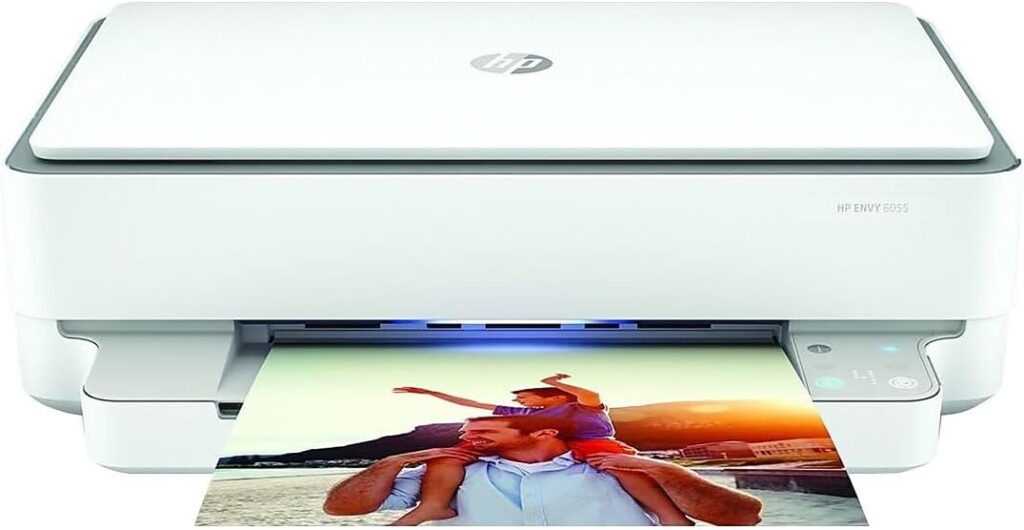
| 6 | HP Envy 6055 | Check Price |
| 7 | HP Omen 16 | Check Price |
| 8 | Lenovo Legion | Check Price |
| 9 | Acer Predator | Check Price |
| 10 | ASUS Straight | Check Price |
The most immediate and dramatic change is the chassis. After fourteen years, the iconic tapered wedge is gone. In its place is a uniform, unibody aluminum design that is a clear sibling to the 14- and 16-inch Mac Book Pros . At just 11.3 mm thick and weighing 1.24 kg (2.7 pounds), it is actually thinner and lighter than its predecessor, even if the lack of a taper makes it *look* thicker on a desk . This new silhouette feels less like a drafting tool and more like a futuristic slab—an iPad with a permanently attached keyboard.
The flat edges are not just aesthetic; they drastically improve how the laptop feels in hand. It’s more balanced and easier to pick up off a desk than the old wedge . Apple has also introduced two new colors: Starlight, a warm gold-silver hybrid, and Midnight, a deep, intoxicating blue-black . Here lies the first major compromise. While Midnight is arguably the most beautiful color in the lineup, it is an absolute magnet for fingerprints and smudges. As one reviewer noted, “the second you hold the thing up to a light source, you realise it’s a fingerprint magnet” . It gets to the point where even satisfied users admit regret, noting that if you are “a neat freak, don’t get midnight” . Starlight and Silver are far more forgiving, but the issue is a blemish on an otherwise flawless industrial design.
The screen has grown from 13.3 to 13.6 inches, a feat achieved by shrinking the bezels and—controversially—adding a notch . This Liquid Retina display is a significant upgrade. It hits 500 nits of brightness (up from 400), making it genuinely usable in direct sunlight, and our tests recorded peaks of 515 nits . Color accuracy remains class-leading, covering 96.5% of DCI-P3 with a delta-E of just 0.63 .
However, the notch is a polarizing trade-off. Unlike on an iPhone, where it eats into the screen real estate, Apple has cleverly moved the menu bar upward to flank the notch. This means the usable 16:10 area remains intact . The problem, as identified by power users, is the menu bar itself. If you use a lot of menu bar apps (calendars, utilities, system monitors), the notch swallows them whole. There is no space left, and apps often become inaccessible without cumbersome workarounds . It is a solution that works for minimalists but frustrates productivity enthusiasts. Furthermore, the absence of ProMotion (120Hz) is a glaring omission. While expected at this price point, once you have experienced smooth scrolling on an iPad Pro, the 60Hz panel on this premium laptop feels dated .
Also, check our detailed review of CyberPower PC
Under the hood sits the Apple M2 chip, built on second-generation 5nm technology. With 20 billion transistors, an 18% faster CPU, and a 35% faster GPU than the M1, the specs suggest a beast . In bursty tasks—opening applications, loading large Keynote files, light 4K video editing—the Air M2 feels every bit as fast as the 13-inch MacBook Pro M2. It achieves Geekbench 5 single-core scores of roughly 1900 and multi-core scores north of 8800 . For the student, the writer, or the office worker, this is “more than enough power for the vast majority of tasks” .
However, the “Air” moniker carries a thermal penalty. Because this machine is fanless, it relies entirely on passive cooling. Under sustained workloads—such as exporting a long 4K video or playing a game—the M2 chip throttles aggressively to keep temperatures in check. In Cinebench R23 multi-threaded tests, the fan-equipped M2 MacBook Pro significantly outran the Air, and the chassis can become uncomfortably warm . One user review perfectly encapsulates this duality: the laptop is “designed to overheat and throttle down when pushed” . It is worth noting, however, that for most real-world usage, the laptop runs cool. After 30 minutes of gaming, keyboard temperatures maxed out at a reasonable 43.2°C .
Perhaps the most criticized aspect of the 2022 Air is the pricing and configuration strategy. The starting price jumped from $999 to $1,199, a $200 increase that immediately drew ire . But the real issue lies with the base model’s 256GB SSD. Due to a change in NAND flash configuration, the base SSD is significantly slower in read and write speeds compared to the M1 Air . This isn’t just a benchmark nitpick; it affects daily use when the system swaps memory.
Furthermore, Apple’s insistence that 8GB of RAM is sufficient for a “Pro” level machine is increasingly tenuous. As multiple reviewers and long-term users advise, “upgrade the RAM to 16GB” if you want future-proofing, as 8GB forces the system to rely on that slower SSD . This pushes the effective price of a “good” MacBook Air well beyond $1,500.
Connectivity remains a mixed bag. The return of MagSafe 3 is a genuine triumph—it frees up the Thunderbolt ports and prevents laptop-launching cable trips . However, the machine still only supports *one* external display. In 2022, a premium laptop that cannot natively drive two monitors is a hard sell for professionals . You are also limited to just two USB-C ports, both on the left side, ensuring the dongle life remains strong .
Where the MacBook Air 2022 M2 unequivocally shines is in the holistic user experience. The quad-speaker system is a revelation for such a thin chassis. It supports Spatial Audio and Dolby Atmos, and for the first time, an Air can fill a small room with rich, undistorted sound . The keyboard is excellent, offering a stable, quiet typing experience with a full-height function row (finally replacing the useless Touch Bar of the 13-inch Pro) . The Force Touch trackpad remains the gold standard of the industry.
Battery life is exceptional, if slightly down from the M1 model due to the brighter screen and faster chip. In mixed usage, you can easily get 15-17 hours of work done . One user noted that after a few hours of work and gaming, the battery was “still above 80%” . This is the kind of efficiency that truly defines “untethered” computing.
The 1080p FaceTime HD camera, while upgraded, remains a disappointment. It is better than the 720p webcam of the M1 Air, but the image signal processor (ISP) fails to deliver clean images in moderate lighting. The picture remains “drab and grainy” compared to the quality of the iPhone or iPad, despite using similar hardware .
The 2022 MacBook Air M2 is the best laptop Apple makes for the vast majority of people. It renders the 13-inch MacBook Pro completely obsolete and sets a new yardstick for the ultraportable category . It is undeniably beautiful, fast enough for almost everyone, and boasts battery life that competitors can only dream of.
Yet, it is not the unquestioned “triumph” that the M1 Air was. The M1 Air was a value king; the M2 Air is a premium luxury . The wedge design was sacrificed for a uniform look, the MagSafe port returned but took a USB-C port with it, and the gorgeous midnight color requires a microfiber cloth in your bag. It is a masterpiece of compromise, but it requires the user to compromise, too.
If you can afford the upgrade to 16GB of RAM and a 512GB SSD, you will own a laptop that will serve you flawlessly for half a decade. But if you are looking at the $1,199 base model, you must go in with eyes wide open, knowing that the “Air” in its name now stands less for “entry-level” and more for “effortlessly elite.”